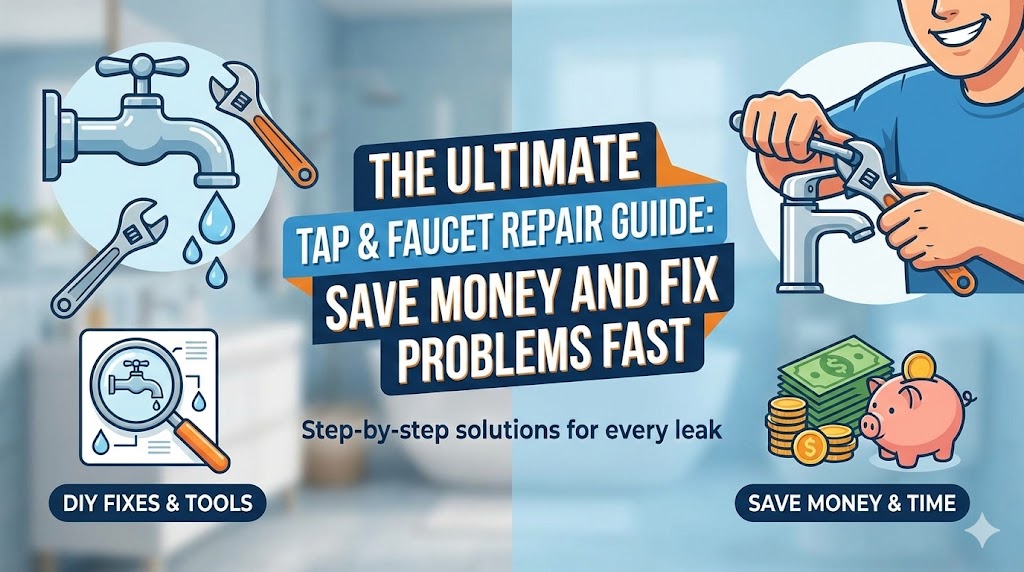

That constant drip-drip-drip from your kitchen tap isn’t just annoying—it’s wasting up to 15 litres of water per day and adding unnecessary ringgit to your monthly bill. Whether you’re in a Kuala Lumpur apartment or a landed property in Penang, tap problems are among the most common household issues Malaysians face.
The combination of hard water, high humidity, and mineral-rich water supply means our taps work harder than in many other countries. But here’s the empowering truth: you don’t need a plumber for most tap repairs. With basic tools and 30 minutes, you can fix the majority of faucet problems yourself.
This guide walks you through every common tap issue with clear, step-by-step instructions designed specifically for Malaysian homes.
Understanding Your Tap: Know What You’re Working With
Before grabbing your wrench, take 60 seconds to identify your tap type. This determines which parts you’ll need and how the repair process works.
Compression Taps (Traditional Design)
The classic design with separate hot and cold handles that you twist to open. Inside, a threaded stem pushes a rubber washer against a valve seat to stop water flow.
Where you’ll find them: Older HDB flats, pre-2000s Malaysian homes, budget bathroom fixtures
Common issues: Dripping from worn washers, squeaking when turning
Lifespan: 5-10 years with proper maintenance
Cartridge Faucets (Modern Workhorses)
Feature smooth, consistent operation with minimal turning. A cartridge inside controls hot and cold water mixing through precise internal channels.
Where you’ll find them: Modern kitchens, mid-range bathroom mixers, most condos built after 2010
Common issues: Reduced water flow, temperature control problems
Lifespan: 10-15 years
Ball-Type Faucets (Single-Handle Classics)
Have a single handle that moves in multiple directions over a rounded ball mechanism. The ball has chambers and springs that control water flow and temperature.
Where you’ll find them: Older single-handle kitchen taps, some bathroom mixers
Common issues: Leaking at the base, loose handle
Lifespan: 8-12 years
Ceramic Disc Faucets (Premium Quality)
The newest technology featuring two highly polished ceramic discs that glide over each other to control water. Extremely durable and smooth to operate.
Where you’ll find them: High-end bathroom fixtures, premium kitchen taps, luxury developments
Common issues: Rare, but sediment can cause dripping
Lifespan: 15-20 years
Quick identification tip: Single-handle taps are usually cartridge or ball-type. Two-handle taps are typically compression or ceramic disc. The handle movement tells the story—stiff and threaded means compression; smooth and light means cartridge or ceramic.
Your Tap Repair Toolkit: What You Actually Need
Don’t overthink this. Most repairs need less than RM100 in tools you’ll use for years:
Essential Tools:
- Adjustable wrench (8-inch)
- Phillips and flathead screwdrivers
- Allen key set (tap handles often hide hex screws)
- Needle-nose pliers
- Bucket and old towels
Common Replacement Parts:
- Assorted rubber washers (RM5-10 per pack at hardware stores)
- O-ring variety pack (RM8-15)
- Plumber’s tape/PTFE tape (RM3-5)
- White vinegar (you probably have this in your kitchen)
Optional but Helpful:
- Flashlight or headlamp
- Penetrating oil (WD-40 for stuck parts)
- Small wire brush for cleaning
- Silicone grease for O-rings
Where to buy in Malaysia: Hardware stores like Mr DIY, Ace Hardware, or local plumbing shops in Jalan Pasar or SS2. For specific cartridges, check the manufacturer (Grohe, Hansgrohe, American Standard Malaysia).
Fix #1: The Dripping Tap (Most Common Problem)
A dripping tap is the household equivalent of throwing money down the drain—literally. One drip per second wastes over 11,000 litres annually. That’s more water than the average Malaysian uses in two months.
What Causes Dripping?
For compression taps: The rubber washer at the bottom of the stem has worn out, creating a gap that lets water seep through even when “closed.”
For cartridge taps: The cartridge seals have degraded or mineral deposits are preventing a complete seal.
For ceramic disc taps: Sediment has scratched the discs or O-rings need replacement (less common).
Complete Repair Process
Step 1: Shut Off the Water
Look under your sink for two small valves (one for hot, one for cold). Turn them clockwise until they stop. If you don’t have isolation valves—common in older Malaysian homes—you’ll need to turn off the main water supply to your home.
Pro tip: Take a photo of the main valve’s location so family members know where it is during emergencies.
Step 2: Prevent Scratches and Prepare Your Work Area
Place a towel in the sink to catch small parts and prevent damage if you drop something. Wrap the tap body with a cloth before using your wrench to protect the chrome finish.
Step 3: Remove the Handle
- Look for a small decorative cap on top of or behind the handle (often labeled H or C)
- Pry it off gently with a flathead screwdriver
- You’ll find either a Phillips screw or hex screw underneath
- Unscrew and lift off the handle (may need gentle wiggling)
Malaysian home note: Humidity can cause handles to stick. If it won’t budge, spray a little penetrating oil around the base, wait 10 minutes, and try again.
Step 4: Expose the Internal Mechanism
For compression taps: Use your adjustable wrench to unscrew the brass bonnet nut (the large hexagonal part now visible). Turn counter-clockwise. Inside, you’ll see the stem with a rubber washer at the bottom.
For cartridge taps: Remove the retaining nut or clip holding the cartridge in place. You may need to pull firmly to extract the cartridge—they can be snug.
Step 5: Identify and Replace the Worn Part
Compression tap repair: At the bottom of the stem, you’ll see a rubber washer held by a brass screw. This washer is probably flat, cracked, or distorted. Remove the screw, replace the washer with a matching size (take the old one to the hardware store if unsure), and reassemble.
Cartridge tap repair: Inspect the cartridge for cracks, worn seals, or mineral buildup. Take the old cartridge to a plumbing shop to find an exact replacement. Different brands use different cartridges—a Grohe cartridge won’t fit a Hansgrohe tap.
While you have everything apart, inspect all O-rings (the small rubber rings on the stem or cartridge). If they’re brittle, cracked, or compressed, replace them. They cost just a few ringgit and prevent future leaks.
Step 6: Clean Everything
This is your opportunity to remove mineral deposits. Soak all metal parts in white vinegar for 15-20 minutes. Use an old toothbrush to scrub away limescale. Rinse thoroughly before reassembling.
Step 7: Reassemble in Reverse Order
Apply a thin layer of plumber’s grease to O-rings and threads. Hand-tighten everything first, then use your wrench for the final quarter-turn. Don’t overtighten—you’ll crack the parts.
Step 8: Test
Turn the water supply back on slowly. Open and close the tap several times. Check for drips. A successful repair means no drips at all—not even after 10 minutes.
What If It Still Drips?
Check the valve seat: In compression taps, the washer presses against a valve seat inside the tap body. If this seat is corroded or pitted, even a new washer won’t seal properly. You’ll need a valve seat wrench (RM15-25) to remove and replace it, or hire a plumber.
Inspect for cracks: Examine the tap body carefully with a flashlight. Hairline cracks can’t be repaired—you’ll need a new tap.
Fix #2: Low Water Pressure (Kitchen Tap Killer)
You turn on the tap expecting a strong stream for rinsing dishes, but instead get a feeble trickle. Before blaming Pengurusan Air (your water supplier), check these common culprits.
The 5-Minute Fix: Clean the Aerator
What’s an aerator? That small screen attachment at the tip of your tap that mixes air with water for a smooth, splash-free flow.
Why it clogs: Malaysia’s water contains minerals (calcium, magnesium) that accumulate over time. Add rust particles from old pipes, and you’ve got a perfect recipe for blockage.
How to fix:
- Unscrew the aerator by turning it counter-clockwise (use a cloth if it’s tight)
- Disassemble the parts—there are usually 3-4 components including a screen
- Soak everything in white vinegar for 30 minutes
- Use an old toothbrush to scrub the screen clean
- Rinse thoroughly and reassemble
- Screw back onto the tap
Result: 80% of low pressure problems are solved right here.
The 15-Minute Fix: Check Supply Lines
If cleaning the aerator doesn’t help:
For regular taps:
- Check that the isolation valves under the sink are fully open (turn counter-clockwise)
- Inspect flexible supply hoses for kinks or damage
- If you have old galvanised pipes, internal rust may be restricting flow (time to call a plumber for repiping)
For pull-out kitchen taps:
- Remove the spray head and pull out the hose
- Check for kinks, twists, or sharp bends that restrict water flow
- The hose weight (the thing that pulls the hose back down) shouldn’t be pinching the hose
The 30-Minute Fix: Cartridge Inspection
Low pressure in just the hot or cold water? The cartridge might be partially blocked:
- Remove the tap handle and extract the cartridge (see dripping tap section above)
- Look for debris stuck in the cartridge’s water channels
- Soak in vinegar for 20 minutes
- Flush clean water through the cartridge
- If still blocked, replace the cartridge entirely
When It’s Not Your Tap
Area-wide pressure drop: If neighbors also have low pressure, it’s a municipal supply issue. Contact your local water board.
Pressure regulator failure: Some Malaysian homes have pressure regulators at the main line. If this fails, call a licensed plumber.
Pipe problems: Corroded or clogged pipes inside walls need professional attention.
Fix #3: Noisy Taps (Screeching, Whistling, Hammering)
A tap shouldn’t sound like a angry kettle or make your whole bathroom pipe system shudder.
The Washer Whistle
Symptoms: High-pitched whistling or screeching when you turn the tap on
Cause: A worn washer vibrating rapidly in the water stream, or a washer that’s the wrong size and loose in its seat
Fix: Replace the washer following the dripping tap repair steps above. Ensure the replacement washer is the exact size—too small and it’ll vibrate and whistle.
Water Hammer (The Shuddering Pipes)
Symptoms: Loud banging or thudding in walls when you turn the tap off quickly
Cause: When water flowing through pipes suddenly stops, the momentum creates a pressure wave that slams through your plumbing system. In Malaysian homes with older or improperly secured pipes, this is common.
Immediate fix: Turn taps off slowly and smoothly rather than quickly
Proper fix:
- Install water hammer arrestors (shock absorbers for your plumbing) at problem areas—costs RM50-150 per arrestor
- Ensure pipes are properly secured to prevent vibration
- If you have high water pressure (above 80 PSI), install a pressure reducing valve
The O-Ring Squeal
Symptoms: Squealing sound during operation
Cause: O-rings are worn, dry, or missing lubrication
Fix:
- Disassemble the tap
- Replace all O-rings
- Apply silicone-based plumber’s grease to the new O-rings before reassembly
- Never use petroleum-based lubricants—they degrade rubber
Fix #4: Tap Won’t Shut Off Completely
Water continues flowing even when the handle is in the “off” position. This is both wasteful and indicates a more serious internal problem.
Likely Culprits
Damaged cartridge: Most common in single-handle mixer taps. The cartridge’s internal seals have failed.
Broken washer: In compression taps, the washer may have completely disintegrated or the screw holding it fell out.
Worn ceramic discs: Rare but possible in ceramic disc faucets. Sediment has scratched the discs so they can’t seal.
Debris in the valve: A piece of mineral deposit, rust, or even a small pebble preventing the closure mechanism from seating properly.
Complete Fix
Step 1: Turn off water supply
Step 2: Disassemble tap completely (follow dripping tap instructions)
Step 3: Inspect the valve seat for damage. Run your finger around it—it should be smooth. If you feel pits or rough spots, you’ll need to resurface or replace it.
Step 4: Replace the cartridge entirely (for cartridge taps) or install a new washer assembly (for compression taps)
Step 5: Flush the tap body by briefly turning on the water supply before reassembling. This clears any loose debris.
Step 6: Reassemble and test
When Replacement Makes More Sense
If your tap is:
- More than 15 years old
- Already required multiple repairs
- Showing significant corrosion
- A budget model where parts cost 60% of a new tap’s price
Consider replacing the entire unit. Modern taps are more water-efficient and durable.
Fix #5: Handle Feels Loose or Wobbly
A loose handle isn’t just annoying—it can cause leaks and makes temperature control difficult.
Quick Tightening
- Remove the decorative cap on the handle
- Tighten the screw underneath with a screwdriver or Allen key
- Test the handle—it should turn smoothly with no play
- Replace the cap
If Tightening Doesn’t Help
Worn handle threads: The internal threads where the handle attaches to the stem have stripped. You’ll need a new handle.
Damaged stem: The stem itself is worn. For compression taps, you can often replace just the stem. For cartridge taps, replace the entire cartridge.
Wrong size handle: If someone previously replaced the handle with the wrong size, it’ll never fit properly. Take the old handle and tap model to a plumbing supply shop for an exact match.
Fighting Malaysia’s Enemy: Rust, Corrosion, and Mineral Buildup
Our climate is brutal on plumbing. High humidity (70-90% most of the year) plus mineral-rich water creates perfect conditions for deterioration.
Preventive Cleaning Routine
Weekly: Wipe down taps after use to prevent water spots and mineral deposits from drying on surfaces
Monthly:
- Remove and clean aerators
- Check under sinks for moisture or early corrosion
- Test all taps for small leaks you might have missed
Every 6 Months:
- Disassemble aerators completely and deep clean with vinegar
- Check all visible supply line connections for corrosion
- Inspect flexible hoses for cracks or bulges
Dealing With Existing Corrosion
Surface rust on chrome:
- Make a paste with baking soda and water
- Apply to rusted areas
- Let sit for 15 minutes
- Scrub gently with a soft cloth
- For stubborn rust, use white vinegar instead of water
Limescale deposits:
- Soak a cloth in white vinegar
- Wrap around the affected area
- Leave for 1-2 hours (overnight for heavy buildup)
- Scrub with a soft brush
- Rinse thoroughly
Never use: Steel wool, harsh abrasive cleaners, or strong acids. They’ll scratch chrome and worsen corrosion.
Long-Term Protection
Install a water softener: Particularly helpful if you’re in Selangor, Johor, or other areas with hard water. Costs RM800-2000 but extends tap life significantly.
Use tap covers: In outdoor or semi-outdoor bathrooms common in Malaysian landed homes, cover unused taps to prevent humidity exposure.
Choose corrosion-resistant fixtures: When buying new taps, look for stainless steel or solid brass with thick chrome plating. Budget zinc alloy taps corrode quickly in Malaysian conditions.
When to Replace Rather Than Repair
Knowing when to stop throwing good money after bad is crucial.
Replace Your Tap If:
It’s had multiple repairs: If you’ve fixed it twice in two years, the cost and hassle of ongoing repairs exceeds replacement.
Visible corrosion has penetrated the surface: When rust eats through chrome plating into the base metal, it’s terminal.
Parts are no longer available: Older or imported tap models may have discontinued parts.
Your water bill has increased inexplicably: Even “small” leaks can waste 20-30 litres daily.
You’re renovating anyway: Upgrading to modern, efficient fixtures makes sense if you’re already doing work.
What to Buy: Tap Selection for Malaysian Homes
Budget (RM50-200):
- Expect 5-7 years lifespan
- Basic compression or low-end cartridge designs
- Fine for guest bathrooms or utility areas
- Brands: Local manufacturers, basic Mr DIY models
Mid-Range (RM200-600):
- 10-15 years with proper maintenance
- Good cartridge mechanisms
- Better corrosion resistance
- Brands: American Standard, Cera, Grohe Essentials
Premium (RM600+):
- 15-20+ years
- Ceramic disc technology
- Excellent build quality and corrosion resistance
- Often include warranties
- Brands: Grohe, Hansgrohe, Kohler, Duravit
Features worth paying for:
- Ceramic disc technology (most reliable)
- Solid brass bodies (corrosion-resistant)
- Thick chrome plating
- Replaceable cartridges (easier future repairs)
- Water-saving aerators (reduce consumption by 30-50%)
Safety First: Essential Precautions
Before every repair:
- Always turn off the water supply – Working with live water pressure can cause flooding and injuries
- Protect finishes – Wrap chrome surfaces with cloth before using tools to prevent scratches
- Use the right-size tools – Forcing wrong-size wrenches strips nuts and makes repairs impossible
- Never overtighten – Hand-tight plus one quarter-turn with a wrench is usually enough. Overtightening cracks brass components.
- Watch for unexpected water – Keep buckets handy. Residual water in pipes will drain when you open things up.
- Take photos before disassembly – Your phone is your best reassembly guide
- Label hot and cold – If both handles look identical, mark which is which before removal
- Test for gas – If working near hot water systems, ensure proper ventilation
When to stop and call a professional:
- Water is leaking from inside walls or ceilings
- You smell mold, mildew, or detect water damage
- The tap base is severely corroded or cracked
- You’ve disassembled something and can’t figure out how it goes back together
- Low pressure affects multiple taps (suggests main line issues)
- You’re uncomfortable with any step of the process
Emergency numbers to save:
- Local plumber: [Add your trusted plumber]
- Water board emergency: 15300 (Syabas/Air Selangor) or check your bill for regional numbers
- Building management: [Your condo/apartment emergency line]
Professional Help in Malaysia: What to Expect
When to Call a Licensed Plumber
Urgent (Call today):
- Water leaking behind walls
- No water flow to entire house/unit
- Sewage backing up
- Burst pipes
- Gas water heater issues
Soon (Within a week):
- Multiple taps with problems
- Persistent pressure issues
- Replacement of main water lines
- Installing new fixtures requiring wall work
Non-urgent (Schedule when convenient):
- Upgrading to better fixtures
- Cosmetic improvements
- Preventive inspection of older systems
Cost Expectations in Malaysia (2024)
Service calls:
- Standard visit: RM80-150 minimum
- Emergency/after-hours: RM150-300 minimum
- Weekends/public holidays: +30-50% surcharge
Common repairs:
- Replace tap washer: RM50-100 (labour only)
- Replace tap cartridge: RM80-150 (labour only)
- Install new kitchen tap: RM100-200 (labour)
- Install new mixer tap: RM150-300 (labour)
- Fix pipe leaks: RM100-500 (depending on location)
Parts (typical retail prices):
- Tap washers: RM5-15
- Cartridges: RM30-150 (brand dependent)
- Basic compression tap: RM50-150
- Mid-range mixer tap: RM200-400
- Premium brands: RM600-2000+
Finding Reliable Plumbers
Good sources:
- Recommendations from neighbors (they’ve seen the quality)
- Building management approved contractors (already vetted)
- Google/Facebook reviews (but read critically)
- Kaodim, Recommend.my, or similar platforms (with reviews)
Red flags:
- No business license or registration
- Demands full payment upfront
- Can’t explain what’s wrong
- Pushes expensive replacements without explaining why
- No itemized quote
What to ask before hiring:
- “What’s your diagnostic fee?” (Many charge RM50-100 just to assess)
- “Is there a minimum charge?” (Most have a 2-hour minimum)
- “Are parts included or separate?” (Usually separate)
- “Do you have insurance?” (Protects you if something goes wrong)
- “What’s your warranty on work done?” (Reputable plumbers offer 30-90 days)
The Malaysian Home Maintenance Calendar for Taps
Monthly Tasks (15 minutes)
- Clean aerators on all taps
- Check under sinks for moisture
- Test all taps for unusual sounds
- Wipe down fixtures to prevent mineral buildup
Quarterly Tasks (30 minutes)
- Deep clean all aerators with vinegar soak
- Inspect flexible supply hoses for wear
- Check all handles for looseness
- Test water pressure at all locations
Annual Tasks (1-2 hours)
- Disassemble and service frequently-used taps
- Replace O-rings on taps showing wear
- Flush out sediment from pipes
- Consider water quality testing if you’ve noticed changes
- Inspect main water valves for proper operation
Every 5 Years
- Replace rubber hoses and supply lines (they degrade even without visible damage)
- Consider upgrading old compression taps to modern cartridge types
- Have a plumber inspect your entire plumbing system
- Evaluate whether tap replacements make sense
Frequently Asked Questions
Q: My tap drips only when it’s hot outside. What’s happening?
A: Metal parts expand with heat. This suggests your washers or seals are borderline worn—they seal when cool but gap slightly when expanded. Replace them before the problem worsens.
Q: Should I use plumber’s tape on everything?
A: No. Use PTFE/plumber’s tape only on threaded metal connections (like where supply lines connect). Don’t use it on compression fittings, rubber washers, or inside tap mechanisms.
Q: Can I use WD-40 to lubricate tap parts?
A: Never use WD-40 or petroleum-based lubricants on rubber parts—they cause rubber to swell and deteriorate. Use only silicone-based plumber’s grease.
Q: How do I know if my water pressure is too high?
A: Normal household pressure is 40-60 PSI. Above 80 PSI can damage fixtures. Buy a pressure gauge (RM20-40 at hardware stores) that screws onto an outdoor tap to test. If high, install a pressure reducing valve.
Q: My new tap leaks where it meets the sink. Help!
A: The rubber or silicone gasket under the tap base is either missing, damaged, or not seated properly. Remove the tap, clean both surfaces thoroughly, apply plumber’s putty or silicone sealant, and retighten. Don’t overtighten—you’ll crack the sink or tap.
Q: Should I repair or replace a 10-year-old tap?
A: If it’s a quality tap and only needs a simple cartridge replacement (RM50-150), repair makes sense. If it’s a budget tap requiring multiple parts or showing corrosion, replacement is usually better value.
Q: Why does my tap water sometimes look rusty?
A: This often happens after water supply interruptions or main pipe maintenance in your area. The disturbance stirs up rust particles from old pipes. Run the cold water tap for 5-10 minutes to flush it out. If it persists, your internal pipes may be corroding.
Q: Can hard water really damage my taps?
A: Absolutely. Hard water (common in KL, Selangor, Johor) contains high levels of calcium and magnesium that form limescale. This clogs aerators, blocks cartridges, and corrodes metal surfaces. Regular cleaning and possibly a water softener are your best defenses.
Final Thoughts: Empower Yourself, Save Money
Malaysian homeowners waste thousands of ringgit annually calling plumbers for simple repairs that take 15 minutes to fix yourself. A dripping tap seems minor, but it costs you RM30-50 per month in wasted water—that’s RM360-600 yearly.
By mastering these basic repairs, you:
- Save RM500-1500 annually in plumber fees
- Prevent small problems from becoming expensive emergencies
- Extend the life of your fixtures by years
- Gain confidence tackling other home maintenance tasks
- Reduce water waste (good for your bill and the environment)
Start simple: Your first repair will take an hour. Your fifth repair will take 20 minutes. You’ve got this.
Keep this guide bookmarked, invest in a basic tool kit, and remember—every plumber started by learning to replace a washer. The only difference between you and them is practice.
Now go fix that dripping tap that’s been annoying you for months. Your water bill will thank you.